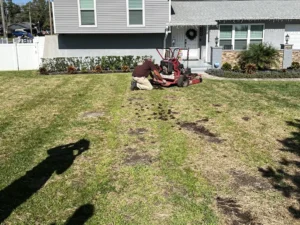
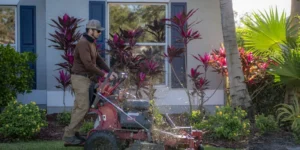
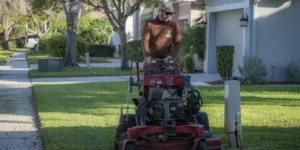
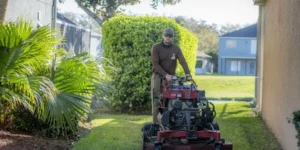
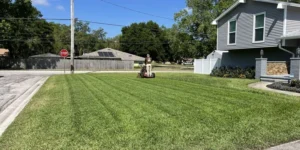
Late spring through early summer (April through June) is the best window to aerate a Florida lawn, timed just before the growing season begins. Florida’s sandy soil often drains well on its own, so aeration matters most for lawns with compaction or heavy traffic. Copperhead Property Maintenance evaluates soil type and turf health first, so every aeration schedule matches the property’s actual growing conditions and grass species.
Key Takeaways
Florida’s warm climate and heavy rains require strategic aeration timing for optimal lawn health year-round.
Aeration creates small holes allowing air, water, and nutrients to penetrate grass roots effectively.
Spring and fall represent the ideal seasons for aerating Florida lawns during peak growth periods.
Copperhead Property Maintenance recommends aerating once or twice annually depending on your lawn’s specific conditions.
Why Does Florida’s Climate Stress Your Lawn?
Sun and heat wear down Florida turfgrass year-round, which is why soil health needs to be a constant priority rather than a seasonal chore. Near-daily sunshine brings heat stress, drought pressure, and fast growth cycles that most grass can’t outrun alone. Homeowners want the same thing: a green, healthy lawn that holds up to daily life — but Florida’s climate, rainfall, and foot traffic make that harder to achieve without the right attention underneath the surface.
Why does soil get compacted in Florida yards?
Soil compacts gradually through ordinary use — foot traffic, mower passes, heavy rain, and gravity press soil particles tighter together over time, blocking air, water, and nutrients from reaching grass roots. This is exactly why proper lawn care when to aerate becomes such a critical question for Florida properties. The stress points that stack up in a typical yard include:
Intense, near-daily sun exposure driving heat and drought stress
Frequent, heavy rainfall compacting topsoil between mowing visits
Regular foot traffic from families, pets, and lawn equipment
Rapid seasonal growth cycles that demand consistent root access to nutrients
Left unaddressed, these factors leave lawns thin, patchy, and less resilient season after season.
When Is the Best Time to Aerate?
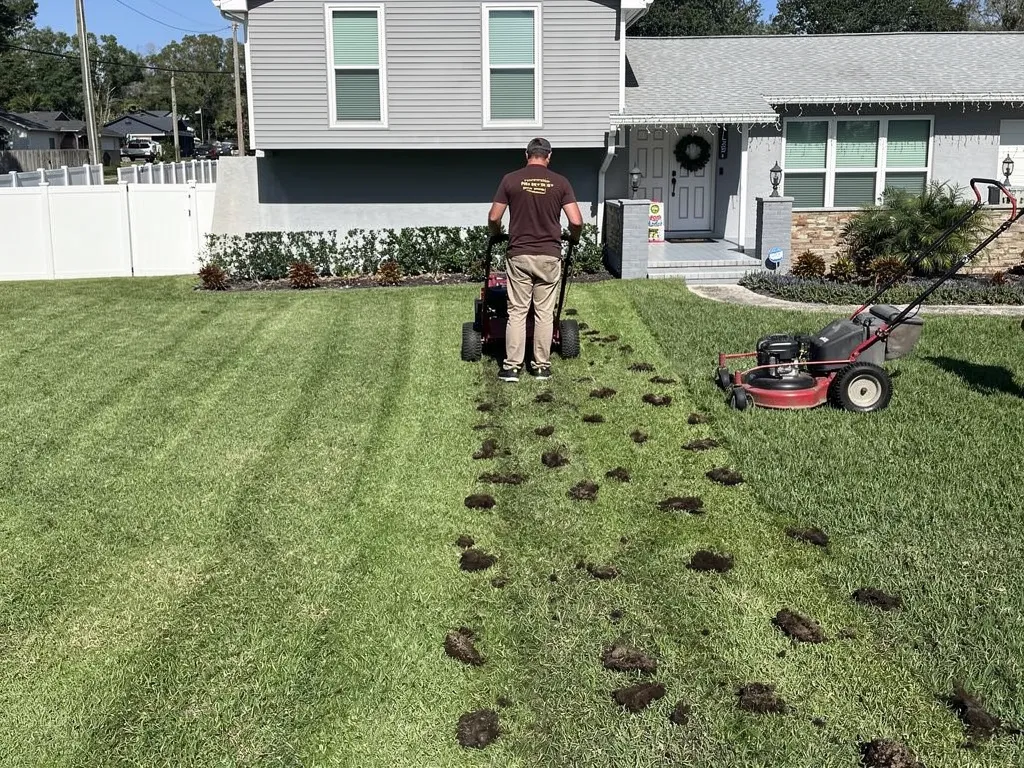
Growth season sets the aeration schedule for Florida lawns. Lawn care when to aerate is one of the most common questions homeowners ask, because timing matters: aeration relieves soil compaction and opens channels for stronger roots, and doing it outside the active growing period delivers far less benefit. Aeration timing should track the lawn’s natural growth cycle rather than a fixed date, since grass types and rainfall vary by region. Two windows are worth avoiding outright: dormancy, roughly December through February in Central Florida, when grass can’t recover from core aeration and open soil invites winter weeds. The height of summer drought, when hardened soil resists the aerator and stresses turf that’s already struggling.
Aerating Your Lawn in Spring vs. Aerating in Fall
Spring is the primary aeration window for most Florida lawns, since April through June lines up with active growth for warm-season grasses like St. Augustine, Zoysia, and Bermuda. Aerating in spring gives roots the full season ahead to recover and spread before summer heat and rainfall arrive.
Aerating in fall — generally September through early November in Central Florida — works well as a second pass for lawns under heavy traffic or with denser, clay-influenced soil, as long as it happens well ahead of winter dormancy so turf has time to heal. For most properties, a single spring aeration covers the year, with a fall follow-up reserved for lawns that need extra attention.
Does aeration need to match the fertilization schedule?
Yes. Nutrients reach root zones more effectively once compacted soil has been opened up, so scheduling aeration and fertilization together produces more consistent results than treating them as separate tasks.
Why does timing vary so much between Florida neighborhoods?
Land O’ Lakes illustrates why no single date works for every yard: the area mixes established homes with newer developments, and each carries different soil conditions and turf maturity. Factors to weigh before scheduling aeration include:
Turf maturity — newer sod often needs a different rhythm than established lawns
Neighborhood soil conditions — new developments frequently have more compacted subsoil from construction
Growth cycle alignment — aeration timed with active growth supports faster root recovery
Fertilization calendar — pairing aeration with the seasonal feeding schedule maximizes nutrient uptake
Skipping this alignment leaves compacted soil unaddressed through another growth cycle, and root development suffers as a result.
What Signs Show Your Lawn Needs Aeration?
Compacted soil sends clear warning signals long before grass turns brown. Foot traffic, heavy rain, and routine mowing press soil particles tighter together over a growing season, resulting in a lawn that struggles no matter how much water or fertilizer gets applied. Once soil tightens up, air, water, and nutrients can’t reach the root zone, roots stay shallow, drainage suffers, and the lawn becomes more vulnerable to Florida’s heat and sudden rain bursts.
How can homeowners tell if their soil is compacted?
Look for grass that appears flattened in high-traffic zones, especially near play areas or walking paths. Puddling water after rainstorms and thinning turf in specific patches are additional red flags, along with:
Grass that stays matted down even days after foot traffic
Standing water that lingers longer than it should after rain
Patchy or thin turf despite consistent watering and feeding
Soil that resists a standard screwdriver pushed into the ground — if it goes in like the earth is brick rather than cake, compaction is already severe
Hardpan cracks that appear in the soil during dry spells, a sign clay content has shrunk and hardened
Grass that feels unusually spongy or bouncy underfoot, often a sign a thick thatch layer isn’t decomposing because the soil beneath it lacks oxygen
Does mowing pattern affect compaction?
Mowing along the exact same lines compresses soil in those tracks. Rotating mowing direction each session helps distribute pressure more evenly and keeps one contributing factor to compaction from becoming a bigger root-health issue.
How can homeowners check their own soil texture?
A simple jar test at home reveals whether sand, silt, or clay dominates a lawn’s soil, and that answer shapes how aggressive aeration needs to be. Fill a quart jar about a third full with soil, top it off with water and a drop of dish soap, shake thoroughly, and let it settle for 24 hours. Sand settles first, silt follows, and clay forms the final, finest layer — a thick clay layer means soil is holding tighter and will need more thorough aeration than a sandy lot drains on its own. For heavy clay lawns, deeper, closer-spaced core work — plugs pulled roughly 2 to 3 inches deep and spaced 2 to 4 inches apart — gets better results than a lighter pass suited to sandy ground.
Does Your Grass Type Change the Schedule?
Grass type plays a big role in how urgent aeration is for a Florida property. Turf variety changes how compacted the soil gets, how thick thatch builds up, and how often a lawn needs intervention. Florida’s sandy soils drain naturally in many yards, which reduces the need for frequent aeration on certain sod types — but timing still depends heavily on which grass sits on top of that soil.
Which Florida Grasses Need the Most Attention?
Zoysia, St. Augustine, and Bermuda grasses need the most consistent dethatching. These types build up thatch layers faster than more forgiving turf, blocking water and nutrients from reaching the roots — homeowners with these grasses should expect aeration and dethatching to be a recurring part of maintenance.
A side-by-side look at how Florida’s most common turf types compare on thatch buildup and aeration needs:
Should Every Lawn Follow the Same Aeration Plan?
No single schedule fits every property. Copperhead Property Maintenance treats each yard individually, adjusting service based on the turf present and the results a homeowner wants to achieve. Grass type shapes the broader maintenance plan in a few key ways:
Zoysia, St. Augustine, Bermuda — frequent dethatching and closer aeration monitoring
Sandy-soil lawns with self-draining sod — less urgent aeration, but still worth periodic assessment
Seasonal fertilization — feeding schedules run alongside aeration timing, since healthy roots depend on both practices working together
Property managers overseeing multiple grass types get the most value from a maintenance partner who evaluates soil and turf together rather than applying a generic timetable across every lawn.
How Often Should Florida Lawns Be Aerated?
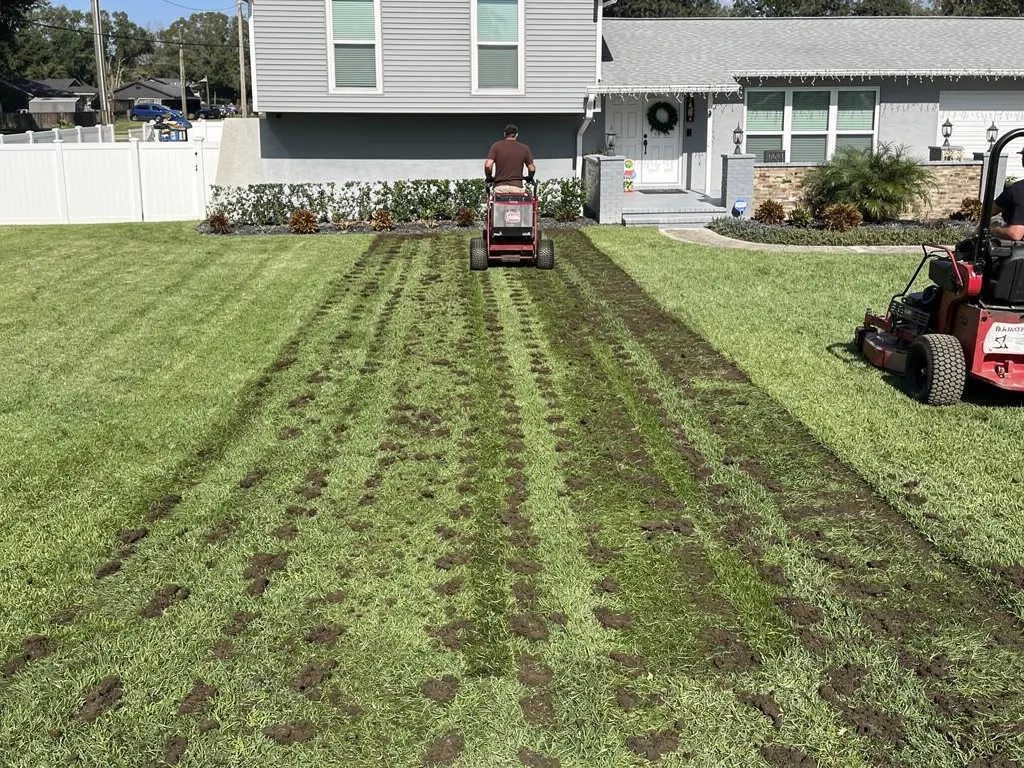
Most Florida lawns benefit from aeration once per year, though the right frequency depends on soil type, traffic, and turf variety. A single well-timed session often carries a lawn through an entire growing season, while heavier clay soils or high-traffic yards may need attention twice a year to stay ahead of compaction. Florida’s sandy soils, seasonal downpours, and year-round growing conditions all shape how compacted a lawn becomes. A locally owned provider understands these region-specific patterns and adjusts scheduling accordingly rather than applying a one-size-fits-all calendar borrowed from a different climate.
Does Every Florida Lawn Need Aeration Every Year?
Not necessarily. Lawns with looser, well-draining soil and light foot traffic may hold up fine on an every-other-year schedule, while yards with dense clay pockets, heavy pet or family activity, or visible standing water after rain typically need annual or twice-yearly service to keep roots breathing properly.
How Do Property Owners Know It’s Time?
Warning signs include water pooling on the surface, thinning turf in high-traffic paths, and grass that feels spongy or hard underfoot — any of these signals point toward compacted soil that’s choking root development. Consistency matters as much as timing: a maintenance team supported by a staff of 15 professionals can manage scheduling across many residential and commercial properties without gaps or missed seasons, which matters because lawn care when to aerate decisions hinge on catching compaction early rather than after damage shows. Reliable, repeat service beats a one-time fix every time.
Should You Aerate and Overseed Together?
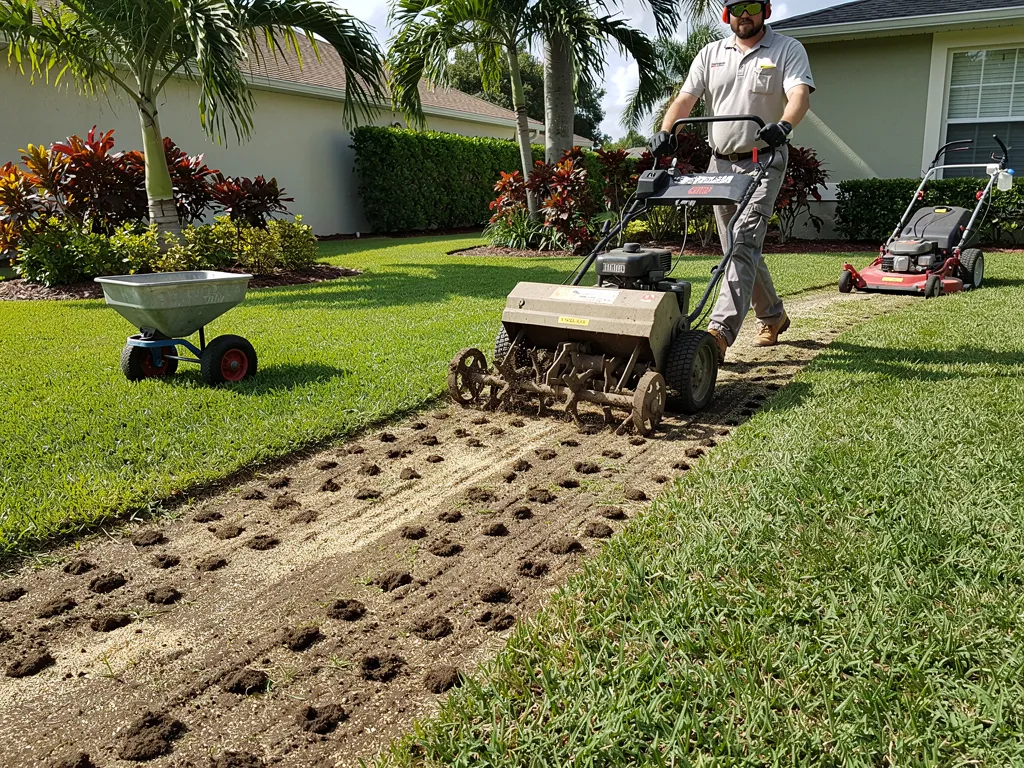
Yes — pairing the two treatments gives new seed direct access to the soil instead of competing with a barrier of thatch and compacted turf. Aeration pulls small plugs of soil, called cores, out of the ground; they break down over the following one to two weeks and filter beneficial microbes back into the newly opened holes. Compacted soil is roughly half solid particles and half pore space meant for air. Water, and once that pore space collapses, oxygen-starved anaerobic microbes crowd out the beneficial bacteria that keep roots healthy — part of why compacted lawns become more prone to root rot and disease. Opening those channels lets air, water, and nutrients travel to the root zone again; without them, grass roots stay shallow, and Florida’s sandy soils compact fast under foot traffic, mowing equipment, and summer downpours. On denser, clay-influenced soil, a thorough job typically means running the aerator over the lawn twice in crossing directions to create a grid pattern with enough soil plugs per square foot, with a third pass sometimes warranted in high-traffic areas. For Florida homeowners weighing lawn care when to aerate decisions, overseeding is the natural next step, not a separate project on a separate schedule.
Does new grass need extra watering after aeration?
Yes — hydration is the deciding factor in whether new seed survives its first few weeks, and that need peaks right after soil gets aerated or overseeded. Irrigation systems designed to reach every zone evenly help seedlings establish without dry patches or overwatered low spots.
What else supports new seed besides aeration?
Soil preparation makes the difference between seed that washes away and seed that roots. Complete landscape projects typically include loosening and amending compacted soil, planting seed or sod at the correct depth, and adding mulch or edging to hold moisture and structure in place. Treating aeration, seeding, soil prep, and watering as one coordinated plan gives Florida lawns the strongest possible start.
Why Trust Professionals With Your Aeration?
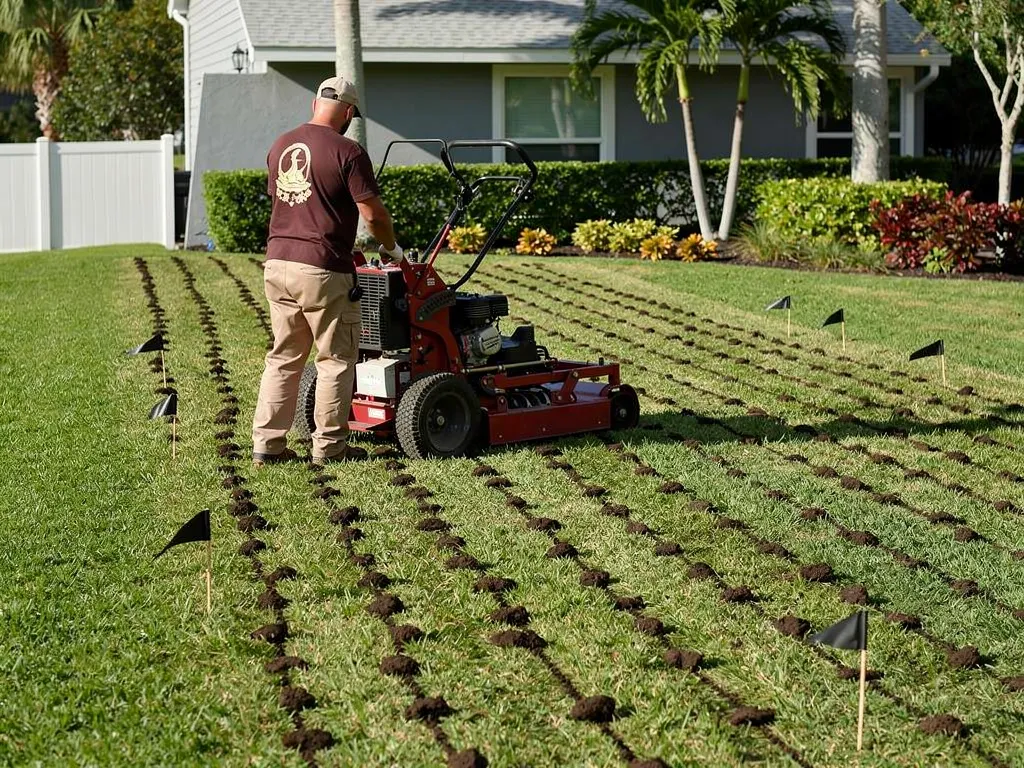
Professional crews bring soil knowledge and equipment precision that most homeowners don’t have on hand. Florida’s sandy soils and compaction patterns vary from one neighborhood to the next, and a trained team reads those conditions before the first core gets pulled — skipping that expertise risks shallow holes, missed compaction zones, or damage to irrigation lines buried close to the surface. Copperhead Property Maintenance operates out of Lutz, FL, so the team works hands-on with Central Florida’s soil conditions across every season, shaping decisions about depth, spacing, and timing rather than relying on generic guidelines pulled from a national playbook.
Does aeration alone keep a Florida lawn healthy?
Aeration opens the door for water and nutrients, but the follow-through matters just as much. Newly aerated turf needs consistent moisture to push roots deeper into those loosened channels, and inconsistent watering undoes much of the benefit. That’s where irrigation support fits into the picture: Copperhead designs, installs, and maintains irrigation systems built to keep lawns, plants, and garden beds properly watered through every season, with systems customized to each property’s layout so every zone gets even, efficient coverage instead of dry patches or overwatered corners.
What makes a professional irrigation setup different?
Component quality and technology separate a reliable system from a patchwork one. The team uses high-quality parts and advanced technology whether installing a new system or upgrading an aging one, which means dependable performance for Florida properties long after the aeration crew leaves. A coordinated approach delivers soil assessment based on regional experience, aeration timed to the property’s specific compaction and grass type, and irrigation zones customized for even post-aeration watering — a combination that protects the investment a homeowner makes in a healthier lawn.
What’s Your Next Step for a Healthier Lawn?
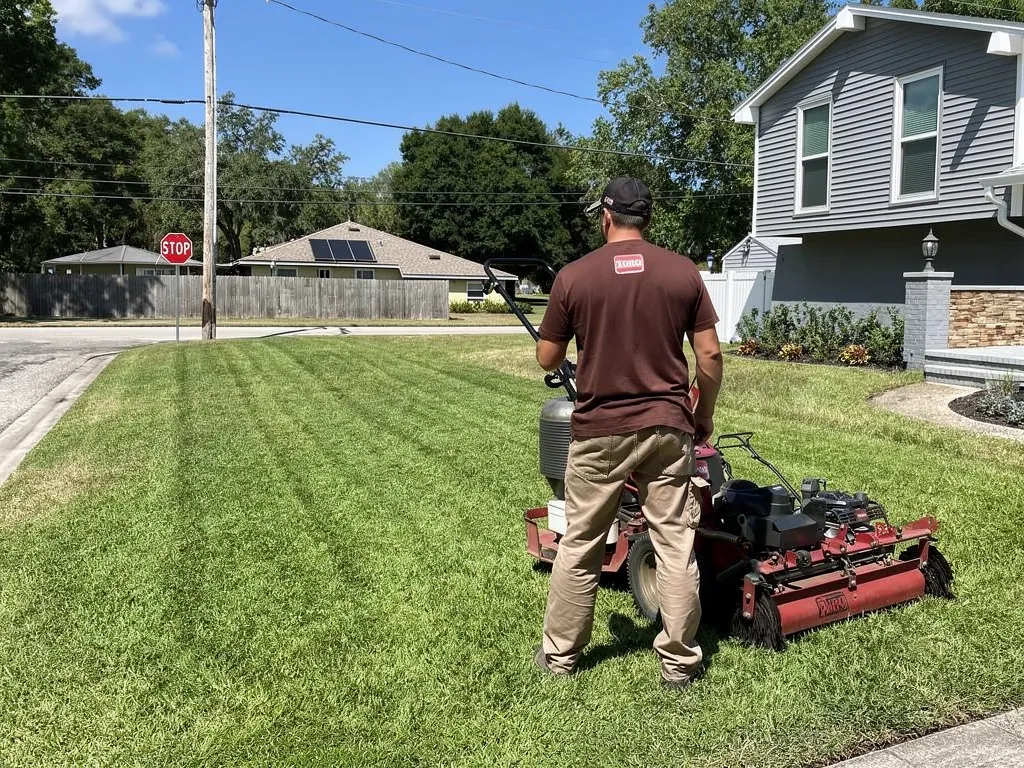
A healthier Florida lawn starts with a plan, not a guess. Skipping proper soil care costs homeowners thick, green turf and invites compaction that chokes roots season after season. Copperhead Property Maintenance delivers reliable lawn care and landscaping services designed to bring out the best in every property, year-round, no matter the challenges Florida’s sandy soil and heavy rains create. Homeowners across Tampa Bay can request a free quote to begin a maintenance plan built around their property’s soil composition and turf variety, because lawn care when to aerate depends heavily on local conditions — grass type, foot traffic, and rainfall patterns all shift the calendar.
How does a property owner know it’s time to aerate?
Compacted soil is the clearest signal. If water pools on the surface instead of soaking in, or if grass looks thin despite regular watering and mowing, the roots likely aren’t getting the oxygen and nutrients they need below the surface.
Why does working with a local team make a difference?
Timing and technique vary by neighborhood, soil type, and turf variety, so generic advice often falls short. Copperhead Property Maintenance is based in Lutz, FL, close to the Tampa Bay properties it serves, and familiar with the region’s specific soil and climate demands. Request a free property evaluation to identify soil compaction issues, ask about a maintenance plan tailored to the lawn’s grass type, and schedule service with a team rooted in the Tampa Bay area.
FAQ
When to aerate a Florida lawn?
Aerate late spring through early summer, specifically April through June, timed just before peak growing season for Florida turf.
Why does Florida soil need aeration?
Foot traffic, mower passes, and heavy rain compact soil over time, blocking air, water, and nutrients from reaching grass roots.
Should aeration match fertilization timing?
Yes, aeration works best paired with a seasonal feeding schedule built around the grass’s active growth period for stronger results.
Conclusion
In closing, timing your lawn aeration to Florida’s growing season gives your turf the strongest foundation for healthy, vibrant growth throughout the year. Compacted soil and stressed grass don’t have to be part of your property’s story. With the right approach at the right time, your lawn gains the room it needs to breathe, absorb nutrients, and thrive. Trust Copperhead Property Maintenance to bring the knowledge and consistency your landscape deserves, season after season.