Why Florida Lawns Struggle — And How to Aerate Clay Soil to Fix It
Aerating clay soil means pulling small plugs of compacted earth out of the ground so air, water, and nutrients can reach grass roots again. Here’s the quick version of how to do it:
- Water your lawn 24-48 hours before aerating
- Rent or use a core aerator (not a spike aerator) to remove 2-3 inch deep plugs
- Make multiple passes over the worst areas
- Leave the plugs on the surface to decompose
- Top-dress with compost immediately after
If your Florida lawn stays soggy after every rainstorm — then bakes into something resembling cracked concrete by mid-summer — clay soil is almost certainly the culprit.
Clay particles are tiny and pack together tightly. That leaves almost no room for air, water, or roots to move through. Over time, foot traffic, mowing, and even rainfall make it worse. Grass thins out. Bare patches appear. Water sits on the surface instead of soaking in.
The frustrating part? Clay soil is actually nutrient-rich. It’s not bad soil — it just needs help breathing.
That’s exactly what aeration does. By removing small cores of soil, you open up channels that break the compaction cycle and give your lawn a real chance to thrive.
Why You Must Aerate Clay Soil
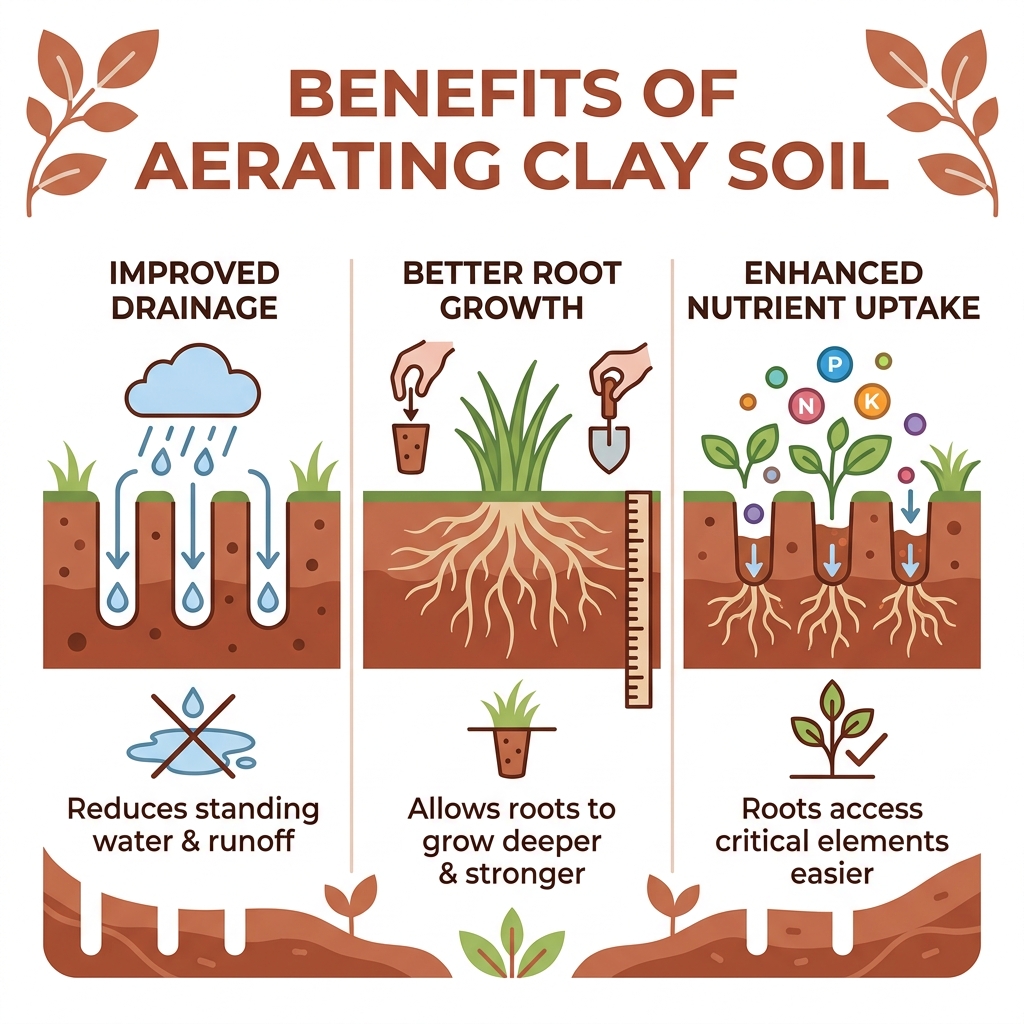
To understand why we need to aerate clay soil, we have to look at what’s happening under the surface. Soil isn’t just “dirt”; ideally, it’s a living ecosystem made of 50% solids and 50% pore space (filled with air and water). In heavy clay, those pores are microscopic.
Clay particles are the smallest of the three main soil components (sand, silt, and clay). Imagine sand particles as basketballs and clay particles as tiny, flat sheets of paper. When those sheets of paper get wet and then stepped on, they stick together in a dense, impenetrable stack. This is compaction.
The Science of the “Squeeze”
When soil is compacted, it becomes “hypoxic,” meaning it lacks oxygen. This is a death sentence for the beneficial microorganisms that live in your yard. Did you know that a single tablespoon of healthy soil contains about a billion microorganisms? These tiny workers secrete enzymes that dissolve organic matter and turn it into food for your grass.
Scientific research on soil microbial diversity shows that aeration increases bacterial diversity. Without oxygen, “bad” anaerobic microbes take over, which can lead to root rot and other diseases. By opening up the soil, we allow the “good guys” to do their jobs again. For a deeper dive into how this helps your landscape, check out The Benefits of Soil Aeration for Your Garden.
Signs of Compacted Soil
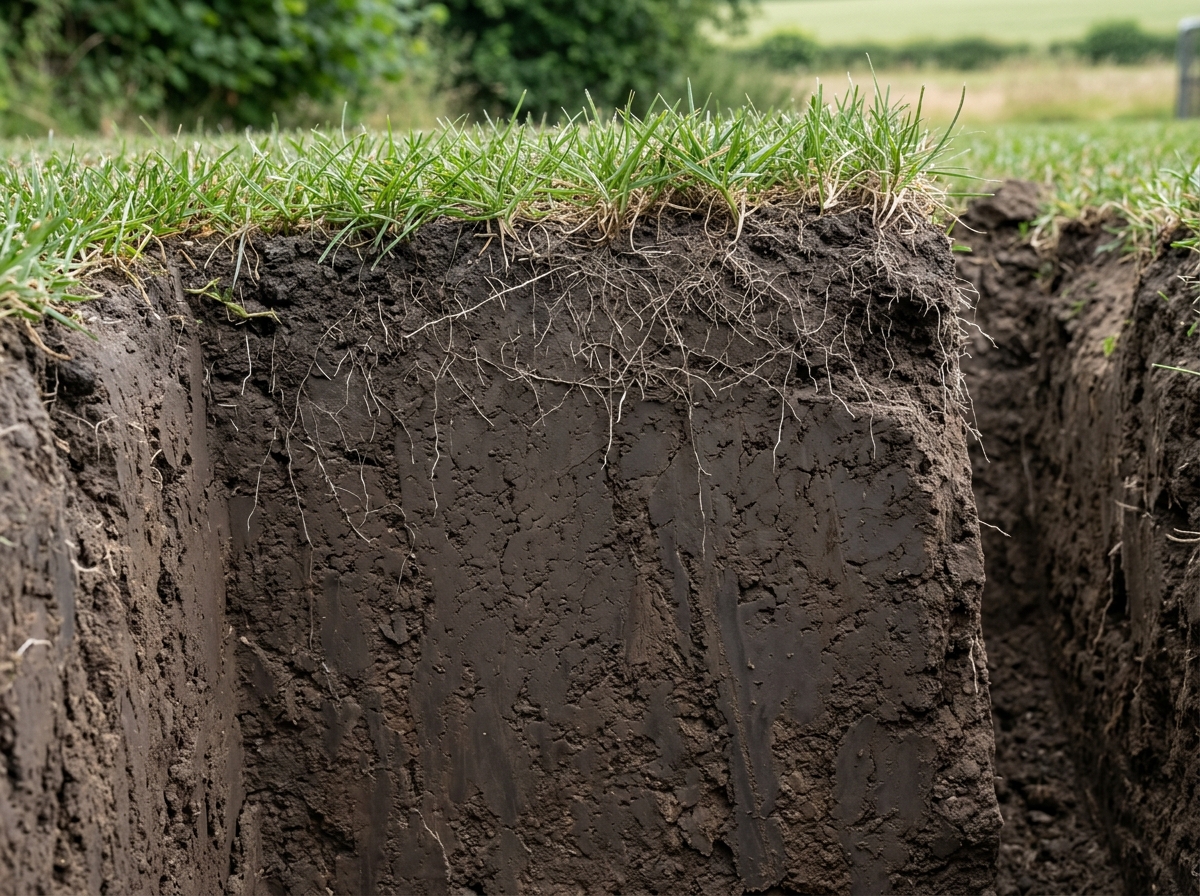
How do you know if your Lutz or Land O’ Lakes lawn is actually compacted? Look for these red flags:
- Water Pooling: If puddles sit on your lawn for hours after a typical Florida afternoon thunderstorm, the water has nowhere to go.
- The Screwdriver Test: Try to push a standard screwdriver into the ground. If it’s like trying to stab a brick, your soil is severely compacted.
- Thinning Grass: If your St. Augustine or Zoysia grass looks “tired” or thin despite plenty of fertilizer, the nutrients likely aren’t reaching the roots.
- Hardpan or Cracks: In dry spells, clay soil will actually shrink and crack, creating visible fissures in the earth.
- Spongy Thatch: If you walk on the lawn and it feels unusually bouncy, you might have a thick layer of thatch (dead organic matter) that can’t decompose because there isn’t enough oxygen in the soil.
Core Aeration vs. Spike Aeration
This is the most important distinction in lawn care. We often see homeowners using “spike” aerators—shoes with long nails or rollers with spikes. Stop!
For clay soil, spike aeration can actually make the problem worse. When a spike enters the ground, it pushes the soil aside to make a hole, which further compresses the soil around the hole.
Core aeration (or plug aeration) uses hollow tines to physically remove a cylinder of soil. This creates a genuine void. The surrounding soil can then “relax” into that empty space, effectively loosening the entire lawn. For the best results in heavy clay, we recommend soil plugs that are 2-3 inches deep and spaced about 2-4 inches apart.
The Best Way to Aerate Clay Soil
Aerating isn’t just about running a machine over the grass; it’s about preparation. If the soil is too dry, the tines won’t penetrate. If it’s too wet, the machine will turn your yard into a mud pit.
Preparing Your Lawn
Before we start the engine, we need to know what we’re working with. We recommend the Jar Test to determine your exact soil texture.
- Fill a quart jar one-third full with soil from your yard.
- Fill the rest with water and a drop of dish soap.
- Shake it vigorously and let it settle for 24 hours. The sand will settle first, then the silt, and finally the clay. If your clay layer is thick, you know you need more aggressive aeration. You can find a detailed guide on this at the Jar Test for soil texture page.
Pre-Aeration Checklist:
- Mow Low: Cut your grass slightly shorter than usual (but don’t scalp it). This helps the aerator reach the soil more effectively.
- Mark Your Sprinklers: This is vital for our neighbors in Wesley Chapel and Odessa. Use flags to mark every sprinkler head, valve box, and shallow utility line. A core aerator will easily snap a plastic sprinkler head.
- Moisture is Key: Water your lawn 24 to 48 hours before you plan to aerate. You want the soil to feel like a wrung-out sponge—moist enough to pull a clean plug, but not muddy.
When to Aerate Clay Soil for Maximum Impact
In our part of Florida, we primarily deal with warm-season grasses like St. Augustine, Bahia, and Bermuda. The best time to aerate clay soil is when the grass is in its peak growing season.
- Late Spring to Early Summer: This is the “sweet spot.” The grass is growing fast enough to quickly fill in the holes left by the aerator.
- Avoid Dormancy: Never aerate when the grass is dormant (usually December through February in Lutz). The grass won’t be able to recover, and you’ll just be opening the door for winter weeds.
- Avoid Extreme Heat: If we are in the middle of a record-breaking July drought, wait for a rain cycle. Aerating bone-dry clay is ineffective and stressful for the plant.
Step-by-Step: How to Aerate Clay Soil Yourself
If you’re a DIY enthusiast, here is how we recommend tackling the job:
- Rent a Core Aerator: Most local equipment rental shops in the Tampa area offer these for about $60–$100 for a half-day. Ensure it is a “gas-powered walk-behind” unit.
- The First Pass: Go over the entire lawn in one direction (North to South).
- The Second Pass: Go over the lawn again in the opposite direction (East to West). This creates a grid pattern and ensures you get enough holes per square foot. In heavy clay, we sometimes recommend a third pass over high-traffic areas.
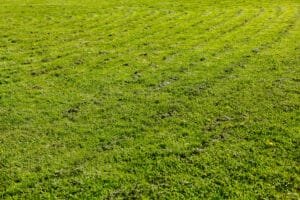
- Leave the Plugs: It might look like a flock of geese visited your yard, but leave those soil cores on the ground! They contain beneficial microbes. As they break down over the next week or two, they’ll filter back into the holes and help decompose thatch.
- Follow Up Immediately: The holes are only open for a short window before they start to collapse. This is the perfect time to add amendments.
Post-Aeration Care and Amendments
Aeration creates a “highway” to the root zone. If you just leave the holes empty, they will eventually fill back up with the same clay soil. To truly change the structure of your yard, you need to introduce organic matter.
Effective Soil Amendments for Clay
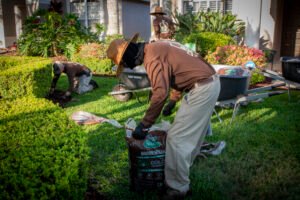
Once the holes are open, it’s time to “top-dress.” This involves spreading a thin layer of material over the lawn and raking it into the aeration holes.
- Compost: This is the gold standard. High-quality, weed-free compost introduces organic matter that breaks up the “stickiness” of clay.
- Worm Castings: These are packed with nutrients and microbes that jump-start soil health.
- Biochar: A specialized form of charcoal that provides permanent “housing” for microbes and helps with water retention without causing compaction.
- Expanded Shale: If you have extremely heavy clay, expanded shale can be raked into the holes to provide permanent aeration.
A Warning About Sand: You might hear old-timers say, “Just add sand to clay to improve drainage.” Be very careful. Unless you add a massive amount of sand (think 1 part sand to 2 parts clay soil), you can actually create a substance that is closer to concrete than garden soil. We generally recommend sticking to organic matter like compost. For more on this, see Improving clay soil with organic material.
Long-Term Maintenance Plan
Improving clay soil is a marathon, not a sprint. You won’t fix decades of compaction in one afternoon.
- Annual Aeration: For heavy clay in Lutz or Land O’ Lakes, we recommend aerating once a year.
- Manage Thatch: If your thatch layer gets thicker than half an inch, it blocks water and air. Regular aeration helps keep thatch in check by encouraging decomposition.
- Organic Fertilization: Use slow-release organic fertilizers. These feed the soil microbes, which in turn feed your grass.
- Deep Watering: Instead of watering for 10 minutes every day, water for 45 minutes twice a week. This encourages roots to grow deeper into the newly aerated soil.
Frequently Asked Questions about Clay Soil Aeration
How often should I aerate heavy clay?
For most of our clients in the Northdale and Heritage Harbor areas, once a year is the standard. However, if you have high-traffic areas (like where the dogs run or where kids play), those spots might benefit from a second “touch-up” aeration in the fall.
Can I add sand to my clay soil to improve drainage?
As mentioned, this is risky. Ideal garden soil is about 20% sand and 40% each of clay and silt. To change your soil ratio with sand, you would need to incorporate inches of it into the top 6 inches of soil. For a lawn that is already established, top-dressing with compost is much safer and more effective.
How long until I see results after aerating?
You’ll notice better water infiltration almost immediately—the next time it rains, the water should soak in rather than sit on top. As for the grass, you’ll typically see a “green-up” and increased thickness within 4 to 8 weeks as the roots expand into the new space.
Conclusion: Let Your Lawn Breathe Again
At Copperhead Property Maintenance, we’ve seen how frustrating clay soil can be for homeowners in Lutz, Wesley Chapel, and across the Tampa Bay area. It’s the difference between a lawn that looks like a lush carpet and one that looks like a struggling patch of weeds.
Aerating clay soil is the single most effective thing you can do to improve the long-term health of your property. It reduces water bills by improving absorption, makes your fertilizer more effective, and gives your grass the “elbow room” it needs to grow deep, strong roots.
If the idea of hauling a heavy aerator from a rental shop and spending your Saturday wrestling with a machine doesn’t sound like fun, we are here to help. We provide professional aeration and top-dressing services tailored specifically to the heavy clay soils of Florida. We serve neighbors in Lutz, Land O’ Lakes, Odessa, and all surrounding communities with the reliable, professional attention to detail your lawn deserves.
Ready to see the difference a little breathing room can make? Check out The Benefits of Soil Aeration for Your Garden or contact us today to get your lawn on a maintenance plan that actually works. Let’s get your lawn out of the mud and back to being the envy of the neighborhood!